
Greener Golf Network Conference
Ullesthorpe Golf Club | 17th Feb 2026
Introduction
The Green Golf Network annual conference in 2026 was another lovely event and our largest conference yet.
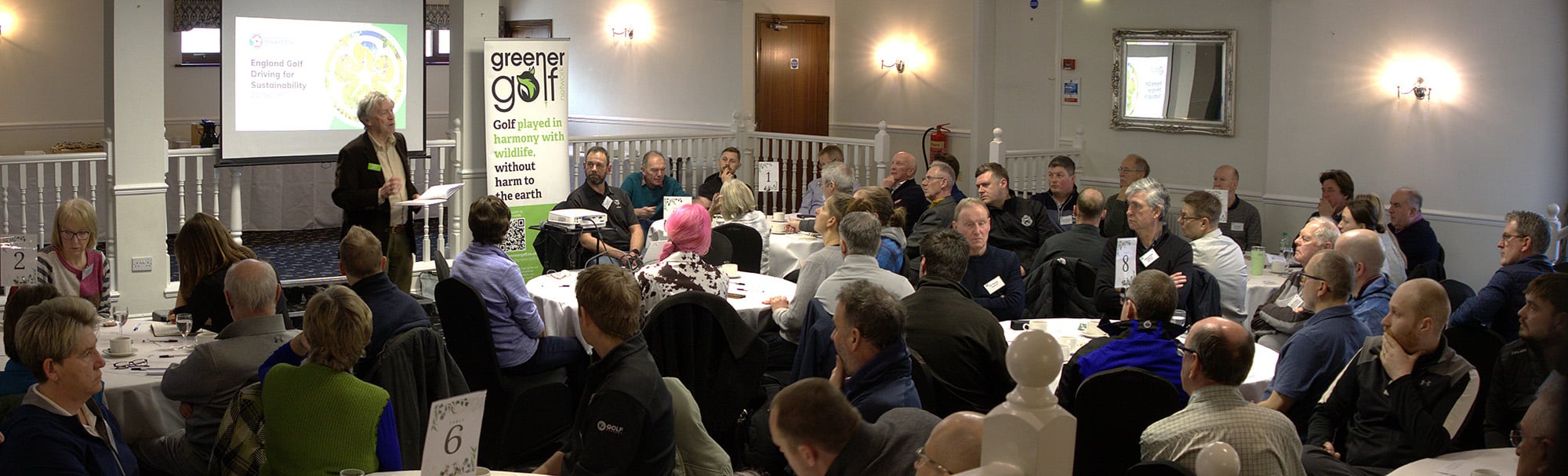
Record numbers attended this year, with well over 90 people making the journey from across the county and country. In total, 25 golf clubs were represented, 15 of which were from our home counties of Leicestershire and Rutland. Among those 15, we were extremely pleased to welcome several clubs who are not currently part of the Nature Recovery Pilot Project with our local wildlife trust. We very much hope that what they learned on the day will inspire them to join the project. The geographical spread of attendees was a real highlight, with clubs represented from as far afield as Hawarden Golf Club in Flintshire to the Nevill Golf Club in Tunbridge Wells.
In addition, we were pleased to welcome a wide range of organisations
- The England Golf Sustainability team
- Warwickshire and Surrey Wildlife Trusts
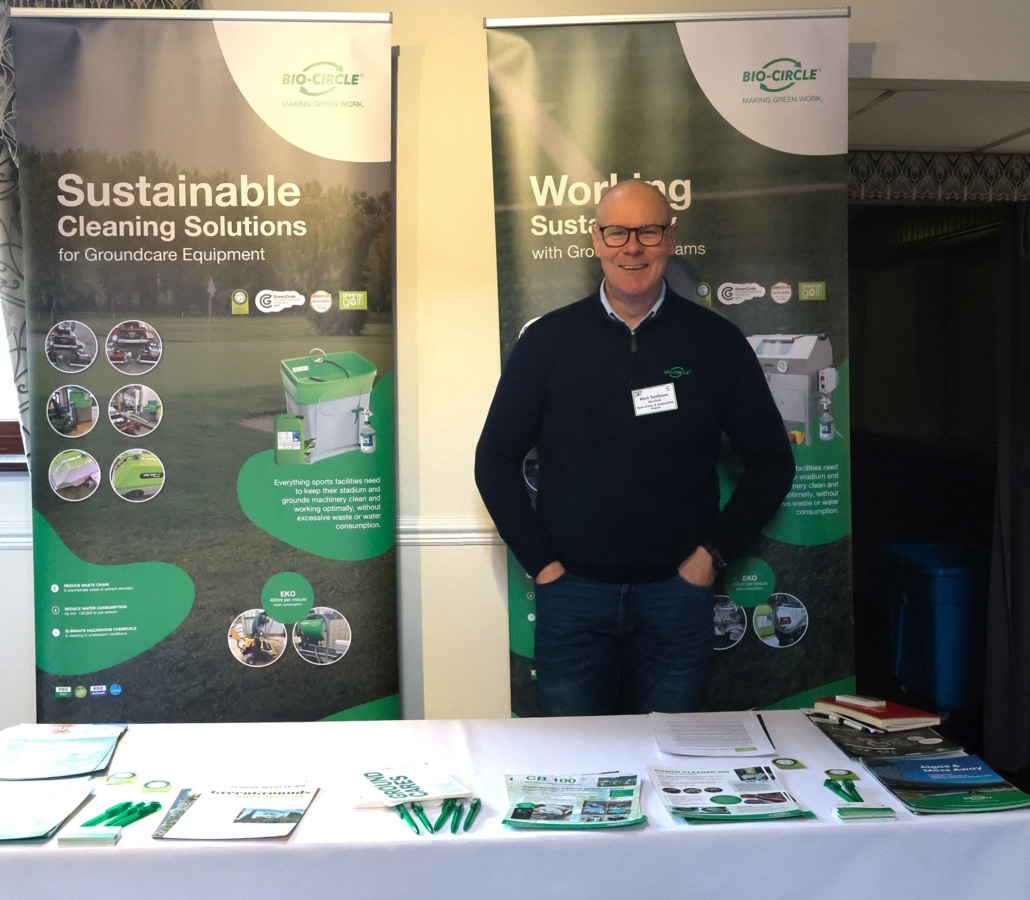
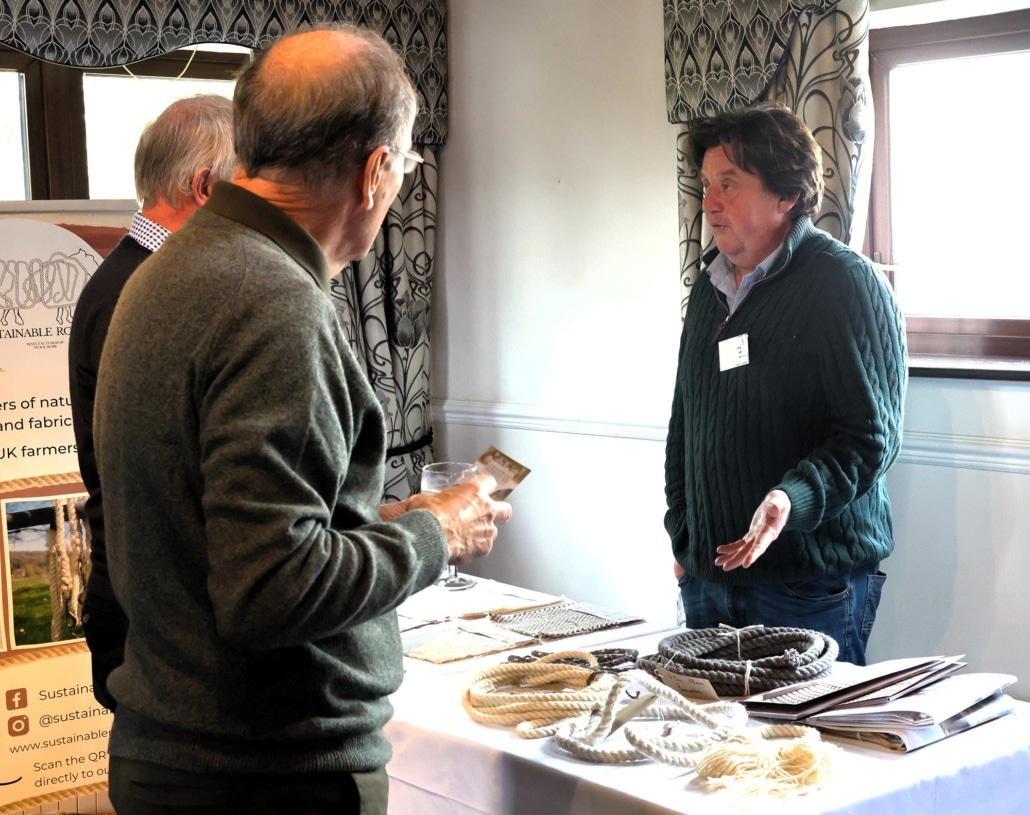
- Several of our partner bodies including Leicestershire County Council, the Forestry Commission, and our commercial partners, Sustainable Rope and Bio-Circle.
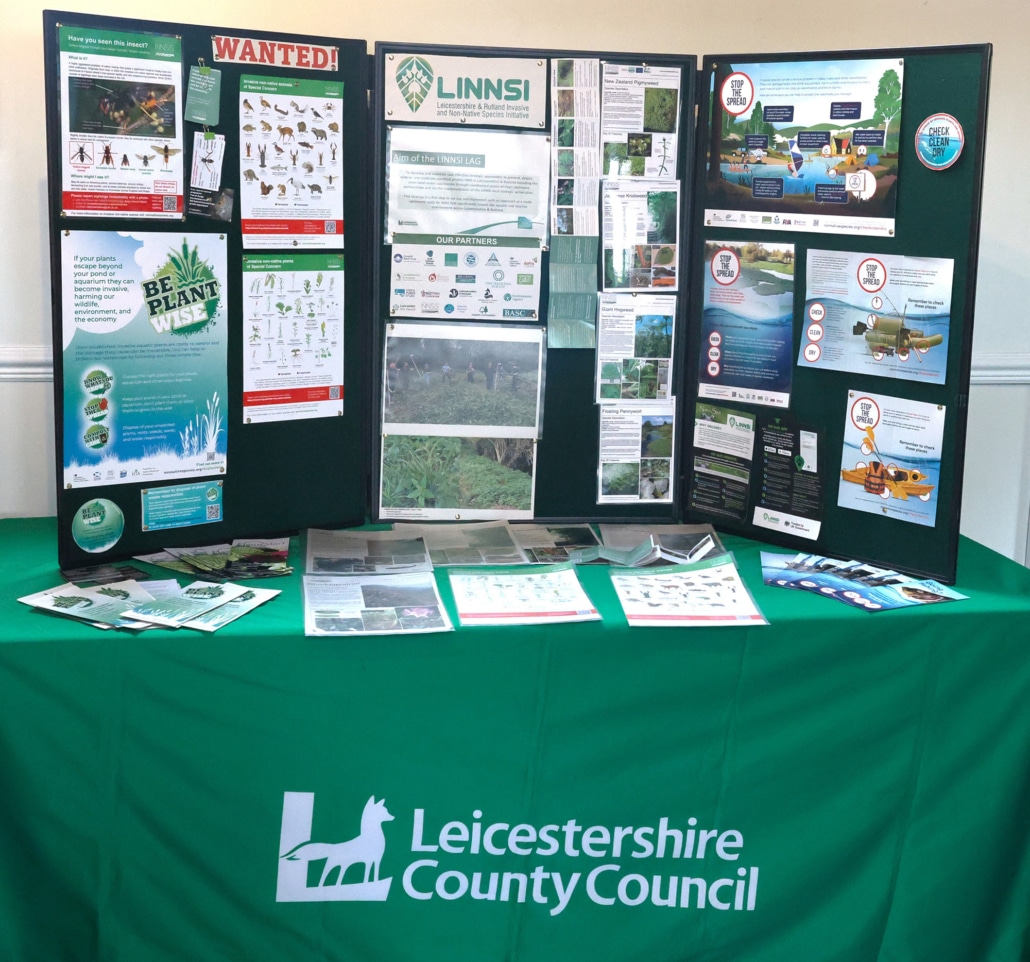
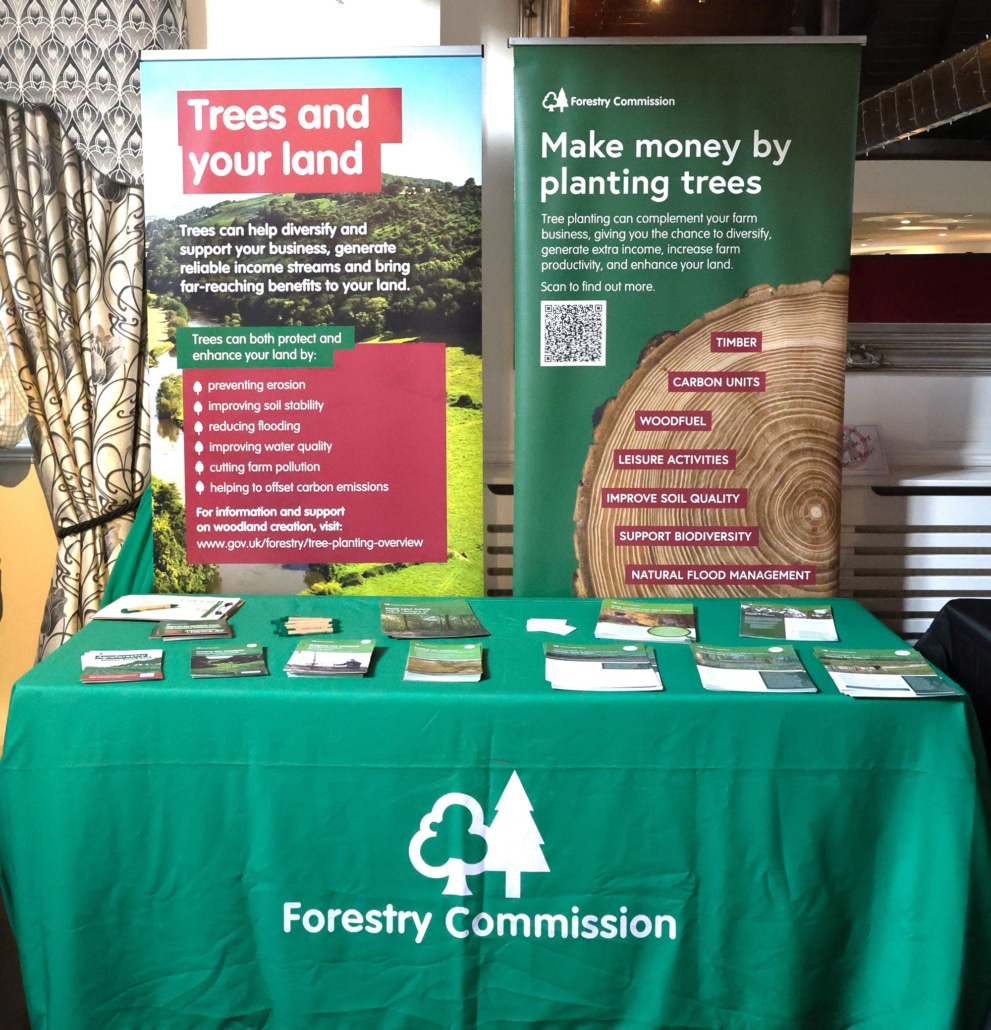
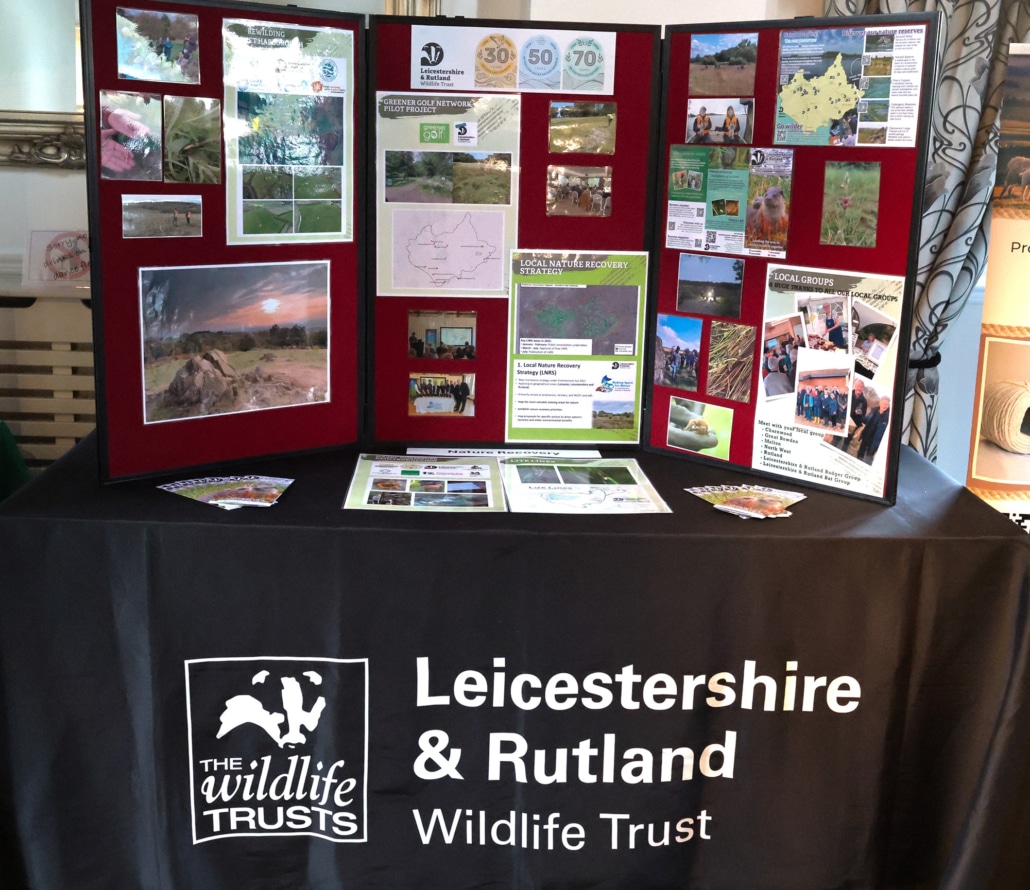
Some of our partners’ displays
LCC
Forestry Commission
LRWT
BioCircle
Sustainable Rope
Our speakers
Here we provide a summary of our main speakers and the key points they made:
James Hutchinson
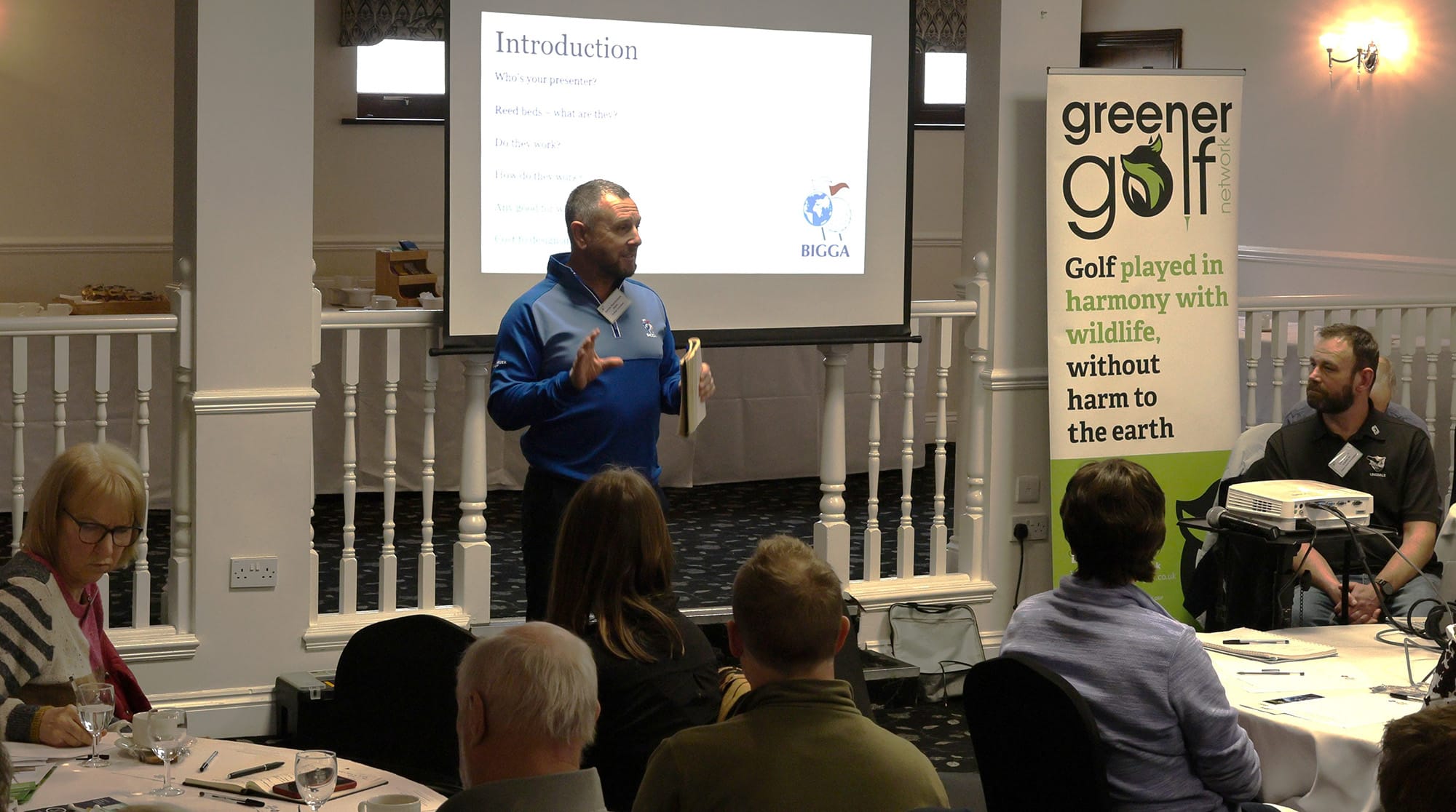
James Hutchinson is one of the foremost freelance consultant ecologists with more than twenty five years’ experience of advising golf clubs throughout Great Britain, including seven years as BIGGA’s resident ecologist.
Talk 1 – Creating a Reed Bed
In the morning session James gave us a brief outline of a typical on-site project to form a “Reed Bed” to treat grey waters naturally. Most projects will involve a 3 or 4 stage ponding process and whilst in theory the final outfall might be drinkable (which is not advised!)
The key points were;
- Grey waters only, not suitable for oils or heavily contaminated waters.
- Need to consider route of final outfall or a closed system.
- Need a minimum of a 1m fall across the system.
- Average cost circa £6,000.
- Will need regular maintenance to include removable of nettles or other non-compatible species.
- Good for providing habitats for a broad range of wildlife and plants.
The presentation was well received and one delegate spoke of the imminent development of such a system at his golf club, but in doing so referred to some additional consultants costs which might need to be included.
Talk 2 – The Importance of Woodland Management
Later in the day James then gave us a full presentation on the wider subject of forestry on golf courses.
The key points from this presentation included;
- It has to be accepted that there is unlikely to be any significant woodland expertise within a normal greens team. Consequently always seek professional advice before carrying out any felling or major works, the costs and fines for undertaking Illegal works are potentially enormous.
- Develop a thinning policy. Close planted plantations of 40 years and older are unlikely to be able to be saved as trees will be spindly and damaged, therefore thin early and allow well-spaced trees to mature naturally and manage the understorey appropriately.
- Identify ancient or strategically important specimens.
- New plantings should be indigenous, reflective of species growing well locally, and have good wildlife value, such as having deep riven bark suitable for species such as Tree Creepers and Nuthatch.
- New planting should always have regard to likely future conditions and environments.
- James took us through the four main ways to estimate a trees’ age.
- Try to link plantings with existing or proposed hedgerows to provide ecological corridors.
- Always have regard to shading, root encroachment, water deprivation and leaf size and collection when identifying a planting position.
- New trees will require protection and initial watering and support maintenance.
Once again James’s presentation was well received and prompted many questions which were all dealt with and which led onto much further discussion in the room.
Earlier in the day the representative from the Forestry Commission (a Greener Golf Network partner and an exhibitor at the conference) had brought to the conference’s attention the availability of a broad range of government backed grants for tree planting and some forestry works, these including planting designed to address local flooding which may be due in part to rapid surface water run-off.
England Golf – The Sustainability Drive
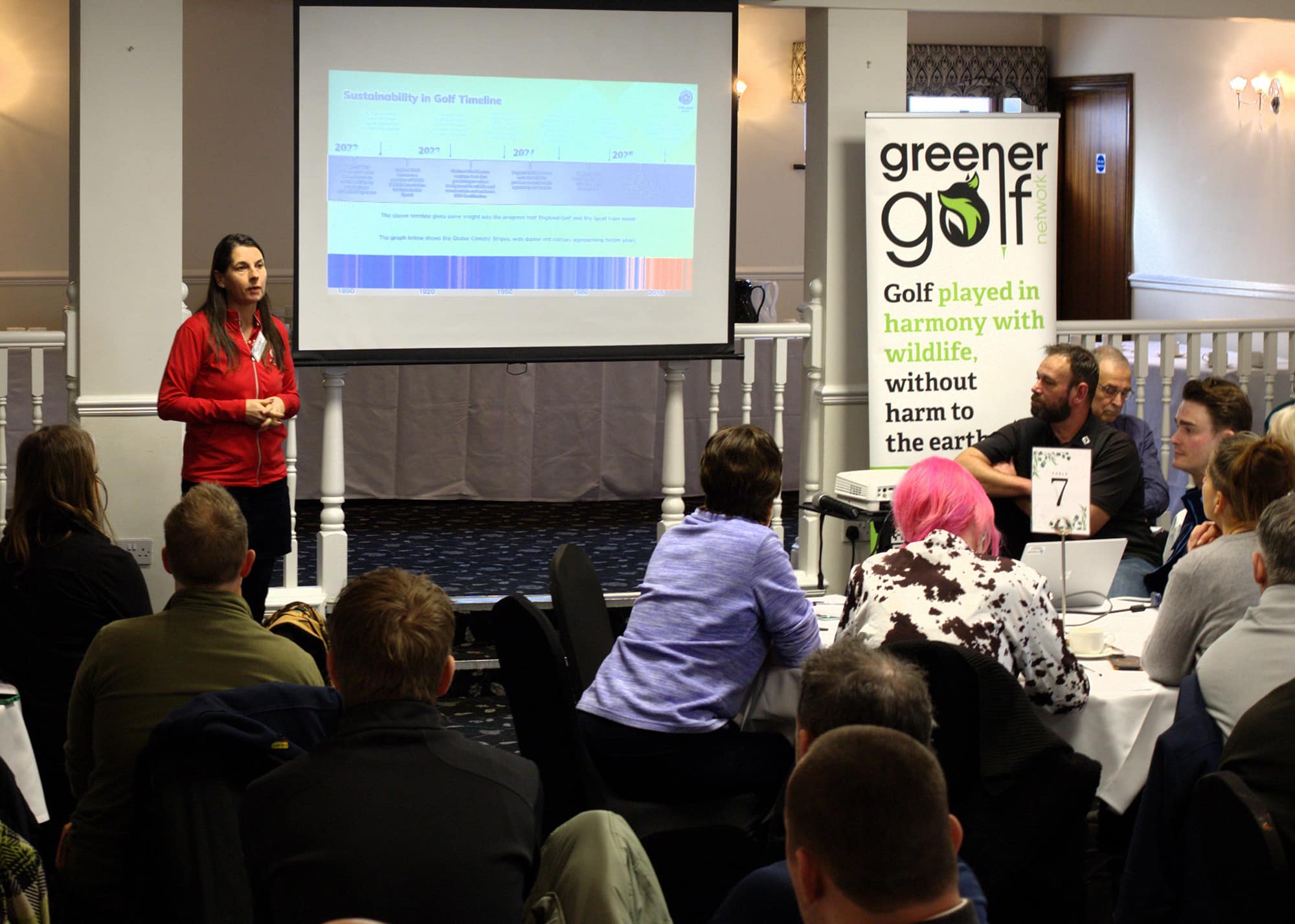
Kirstin McEvoy, the new Head of Sustainability at England Golf, outlined key points from the recently published Sustainability Drive 2025-30.
The ‘Drive’, based on twelve core principles, marks a big step forward by EG in its commitment to sustainability. There are three areas which the ‘Drive’ focuses on: Water resources; Biodiversity and Habitats; and Energy and Emissions. The document suggests key actions which clubs should take on these areas.
A show of hands from the audience suggested about half the clubs present had created a management post of some kind for sustainability. Surprised?
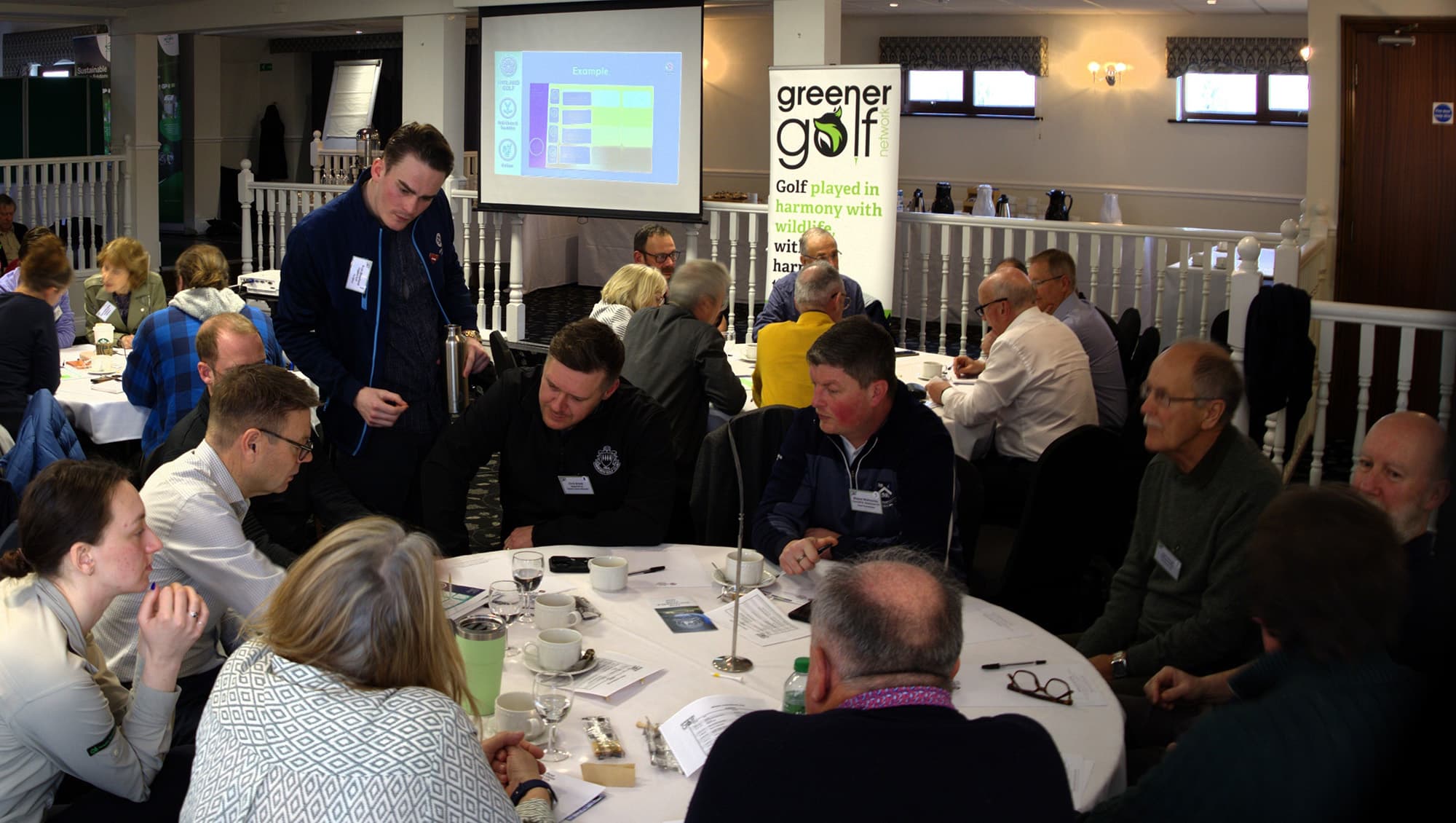
Kirstin and Ross Shepherd, EG’s Sustainability Officer, then organised a round table activity. This involved each group doing a kind of self-assessment to assess where their clubs were on the journey towards effective sustainable practice using the criteria within the ‘Drive’ document. It was clear from later feedback that delegates had found this very useful.
Ross also provided startling, published data and material from the Environment Agency with regard to the impending water crisis.
The EG Sustainability Drive 2025-30 is available to view and download on our website here.
Leicestershire and Rutland Wildlife Trust (LWRT) – Nature Recovery Project update
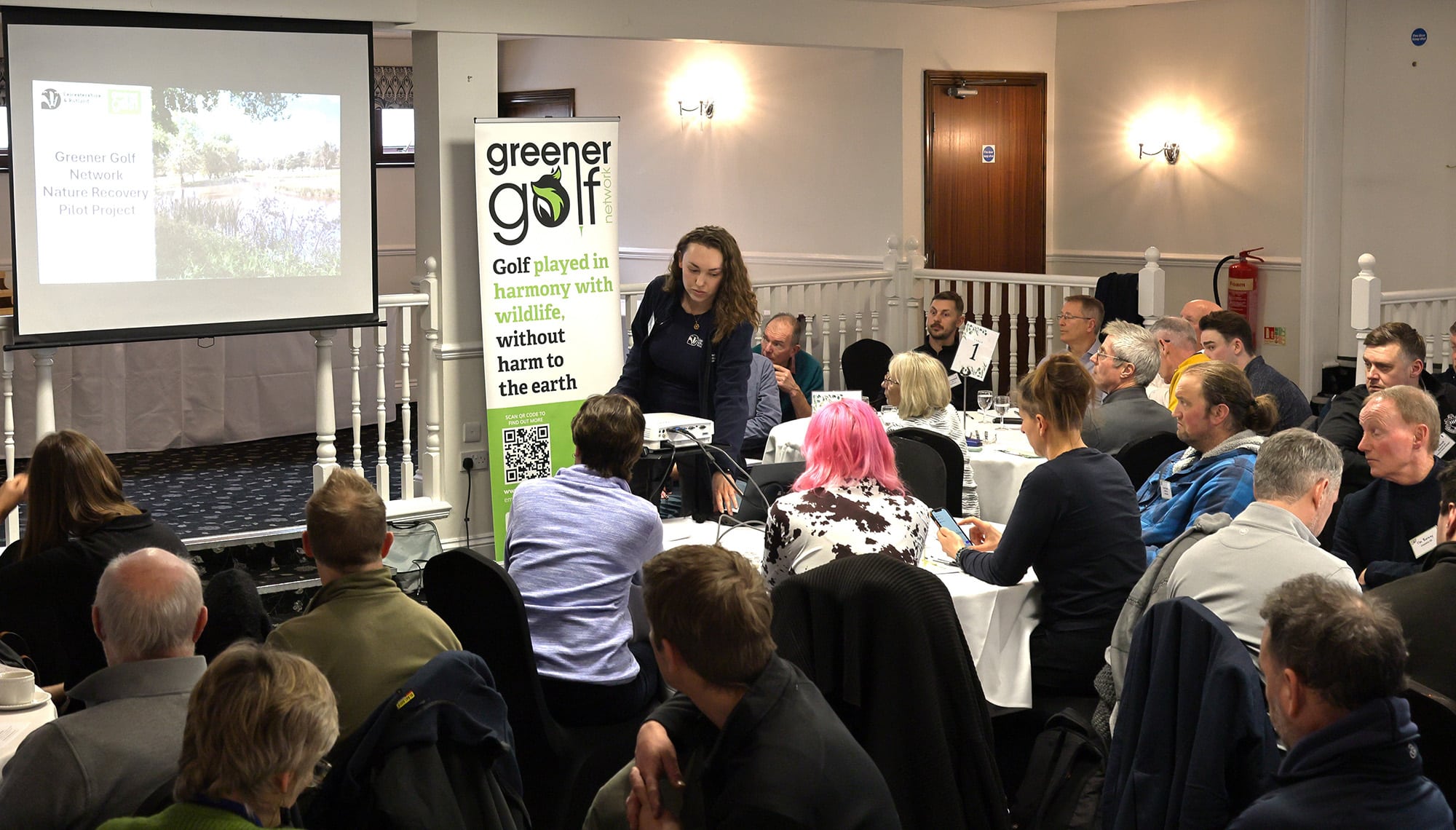
Dr Hannah Sellers presented on the Nature Recovery Pilot Project
- A partnership between 13 Leicestershire & Rutland Clubs and the Wildlife Trust
- Surveys of all courses carried out over the summer – extremely thorough extending to approx. 13 pages
- A few reports have been sent out and the remainder to be forwarded in the next couple of months.
- Each report contains a map of the course with features marked out:
- Habitats – types of grassland, scrub, ponds
- Trees
- Hedgerows
- Woodland types
- Ditches and waterways
- Recommendations made with an example of a management plan for 2 – 3 years
- Highlighted that this project is long-term – the results of changes to habitat and biodiversity taking a few years to show
- As highlighted by England Golf – these surveys are extremely important supporting documents to any planning applications such as water storage security or solar panels and funding applications – they show the commitment of the clubs to sustainability, biodiversity, and saving on carbon emissions.
Having discussed the current stage, future plans for the next year of the project were discussed:
- Establish a Biodiversity Project Group for the partnership with representatives from every Golf Club to provide further direction for the work.
- Use the findings from the baseline surveys to identify common issues and opportunities, and develop common approaches, guidance and training to support clubs.
- At least one site visit to every Golf Club to maintain momentum and provide technical support
- Deliver presentations for Clubs (and members) highlighting the work and opportunities to restore nature on their course as requested
- Annual report highlighting and promoting the achievements of the partnership
- Explore opportunities for additional external funding – both National Lottery Heritage Fund (for example) and commercial sponsorship. This funding would be to enable new works, research, activities to be delivered
- Develop marketing strategies to be able to be used by courses to demonstrate their commitment to enhancing wildlife and providing a wider service for the communities they are based within
- Provide template material for Clubs to use to promote the nature highlights and work being done on the course for members and visitors, with the intention of promoting the Clubs commitment and consequently how they are perceived
- The Trust has born the majority of the costs for undertaking the surveys and developing proposals for the clubs – we will continue to do this for any clubs that sign up to the Partnership next year, but after this the Trust will have to charge the full cost of the activity to any Clubs wanting to join
Jim Oswald- Saving Energy and Money
Jim gave and inspiring, entertaining and informative talk about energy measurement and conservation. Jim is a member of Cosby Golf Club but uses his professional expertise as a mechanical engineer to advise the club on its energy use and conservation. Jim explained that many golf clubs do not have a clear view of their energy use and inadequate maintenance systems. He emphasised the importance of careful and detailed measurement of gas, electricity and water in order to plan more efficient use and conservation. This is exactly what he has done at Cosby.
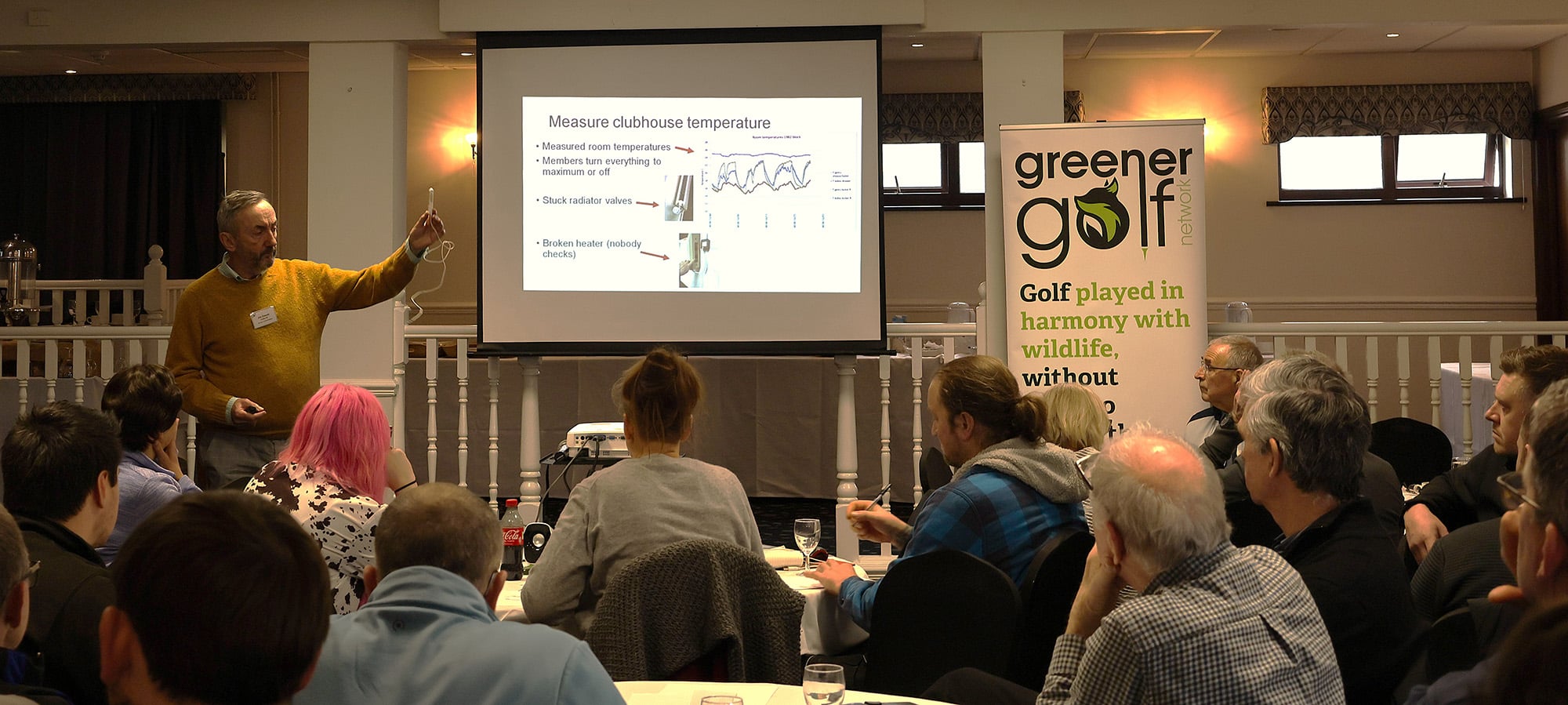
Here are the main recommendations from his talk:
Heating
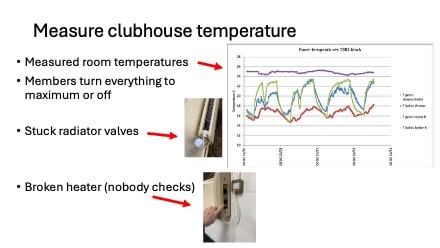
- Inspect system and measure room temperatures in individual spaces
- Check for faulty valves and mechanisms
Electricity
- Make a list of electrical appliances – assess cost
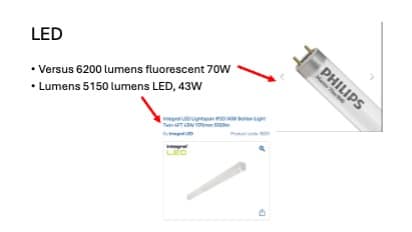
- Replace fluorescent lights and Install LED lights throughout
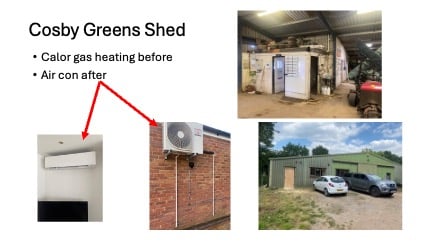
- Install air conditioning rather than direct electrical heaters.
Solar PV panels
- Install solar panela – measure consumption and install correct size. I
- Replace old refrigeration for cellar
These are some of the measures taken at Cosby GC, including installing LED lights, solar panels and air conditioning in the clubhouse and greens shed, which have resulted in an overall reduction in energy costs of 24% over 3 years.
( A fuller version of Jim’s slides are available in full on the Greener Golf Network website in the ‘Library’ section.)
The Greener Golf Network (GGN) promotional video
With support from our sponsor, Calum Cameron, the Network has had a short promotional video made to explain what the GGN is and what it does. The film was shown to our conference audience and was very well received.
The short film is something we would be pleased to make available to golf clubs. It might be used to inform members, for instance, about the environmental work going on, or to provide background on proposed collaboration with the wildlife trust, or to convince a management committee to make a commitment.
Indeed, one of our partner clubs (Hinkley GC) is already planning to use the video on their own website.
Our thanks go to Calum for his support and to Harry Stoker, the videographer and owner of ‘Talking to Crocodiles’ who produced our promotional video.
Thanks
And finally, our thanks to everyone who attended or contributed to our 2026 conference, We look forward to working with you over the coming year and to another great conference in 2027.

